Work & Society
Artisanal Garbage
AI did not invent slop; it broke the effort signal we used to infer sincerity, care and value.
August 1, 2026Work & Society
AI did not invent slop; it broke the effort signal we used to infer sincerity, care and value.
August 1, 2026Enterprise AI
Cloud economics, weak enterprise ROI and gains from human amplification point towards governed hybrid AI.
July 29, 2026Work & Society
The skills AI removes were never the destination; they were the work required to get somewhere more important.
AI Economics
What does AI cost as usage grows, and where does the data go?

Recommended read
Token costs are starting to look less like a software footnote and more like fuel, forcing AI toward efficiency, tiers, and local inference.
Explore by thread
Four recurring questions connect the essays. Start with the newest argument, then follow the thinking as it develops.
About
Digital Opium collects Scott Colebourn's essays on technology adoption, AI, governance, software delivery, and the human consequences of automation. That work now also runs through AIGENTEC, where the same themes become applied AI products. Read the full profile.
Timeline explorer
Use the slider to move chronologically through the essays, then filter by sentiment and opinion to surface relevant pieces.
All posts
August 1, 2026

AI did not invent low-quality content; it broke the effort signal we used to infer sincerity, care and value.
July 31, 2026
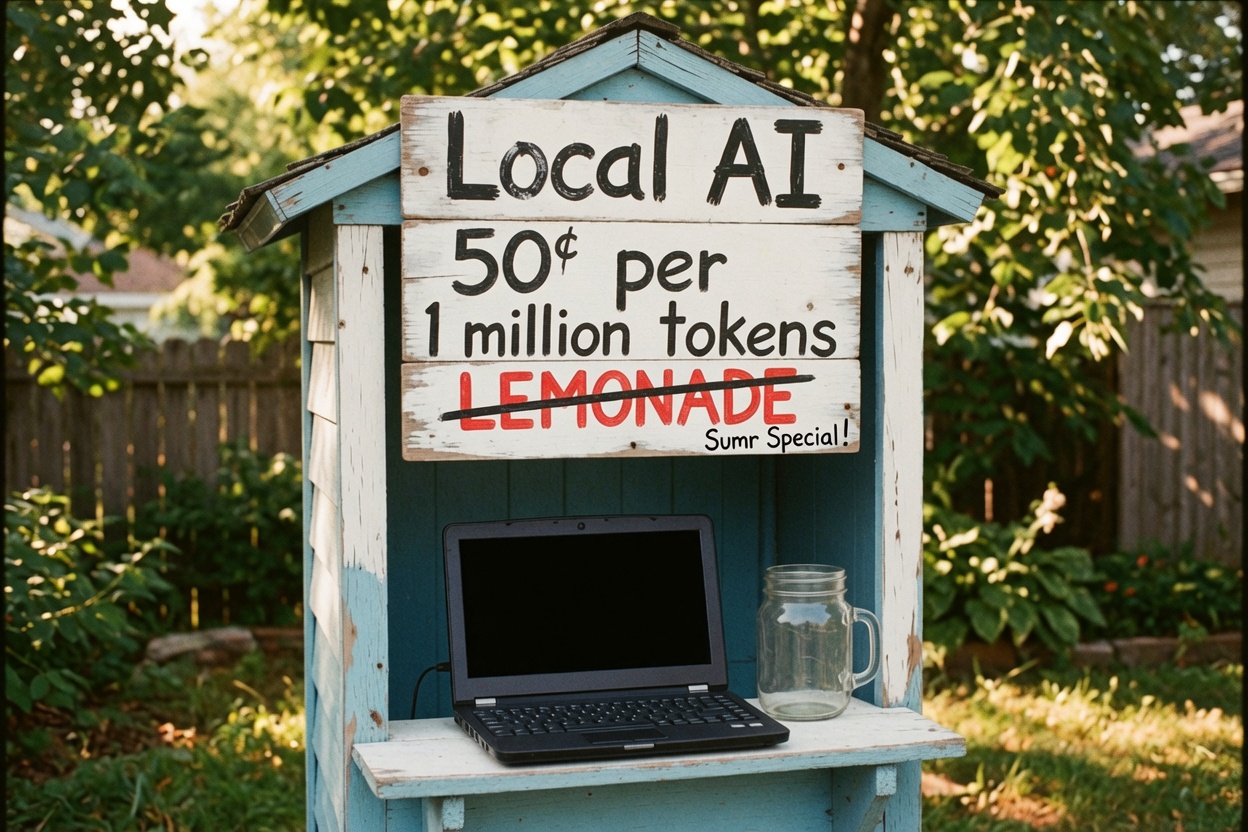
Local AI hardware did not hit a technical wall. Chipmakers and memory suppliers simply made more money sending scarce parts elsewhere.
July 29, 2026

Cloud economics, weak enterprise ROI and gains from human amplification point towards governed hybrid AI, owned and sourced workload by workload.
July 26, 2026

The skills AI removes were never the destination; like maintaining an old car, they were the work required to get somewhere more important.
July 23, 2026

The case for local-first AI comes down to two board-level questions — what it costs as usage grows and where the data goes — and most cloud-centred strategies can answer neither.
July 15, 2026

The personal agent shipped without the ownership: your agent belongs to your ecosystem, your data pays the rent, and the runtime contract that would govern it remains unbuilt.
July 2, 2026

The case for local AI is not cost arbitrage but governance: keep the reasoning loop on infrastructure you control, and treat every escalation to a frontier model as a logged, auditable decision.
June 27, 2026

When governments restrained the most capable frontier models, the expected celebration never came. The quiet reaction signals a harder truth: capability has outrun our ability to govern it.
June 14, 2026

Falling token prices mask a harder truth: the cost of reaching a useful outcome keeps rising, and without deliberate design AI risks rebuilding the gap it promised to close.
June 9, 2026

AI coding works best when it uses the same disciplined stories, tests, and documentation originally created to help flawed humans ship software.
June 6, 2026
Token costs are starting to look less like a software footnote and more like fuel, forcing AI toward efficiency, tiers, and local inference.
June 2, 2026

Aigentec is the platform I built to chase the harder question in enterprise AI: how systems can expand what people are capable of rather than erase what they do.
May 13, 2026

AI creates durable value when it expands human capability and judgement, rather than treating human contribution as a cost to be removed.
April 30, 2026

The BBC Computer Literacy Project helped a generation understand the microcomputer. In 2026, we need the same national seriousness for AI, sovereignty, and governed intelligence.
April 24, 2026

Cloud AI subscriptions are becoming a major operating cost under autonomous workflows, which is why local-first compute is now a practical strategy rather than a hobbyist preference.
March 5, 2026

Enterprises are spending heavily on AI to reduce effort in individual tasks, but that local optimisation misses the larger opportunity: building global intelligence across the business.
February 26, 2026

AI adoption is moving from novelty to consequence, and that shift is exposing uncomfortable truths about identity, incentives, and how we decide who or what to trust.
February 26, 2026

AI's impact on jobs is real, but the bigger near-term effect may be anticipatory: hiring freezes, strategic reductions, and budget reallocation before direct replacement arrives at scale.
January 18, 2026

The strongest near-term value of AI is not autonomous errand running. It is context-aware understanding that turns fragmented business truth into governed, actionable intelligence.
January 13, 2026

Enterprise AI is not only about fluent answers. It is about controlled reasoning, evidence hierarchy, and moving fast without crossing into confident fiction.
January 11, 2026

AI may become the expansion pack that turns scarcity into abundance, but first we have to survive the resource crunch needed to build it.
April 14, 2026

Enterprise AI conversations have shifted from model capability to operational accountability, where governance, traceability, and defensible decisions are now essential.
March 5, 2026

For enterprise operations, contextual precision beats general breadth: systems anchored in private, governed data consistently outperform global models on business-critical tasks.
March 5, 2026

Public cloud AI is useful for broad ideation, but enterprise compliance needs governed local systems built around control, transparency, and operational precision.
March 1, 2026

A March 2026 white paper on the enterprise scaling gap, the now-enforceable EU AI Act, and why sovereign, domain-scoped AI built around your own data is the only path to compliant value.
September 12, 2025

When I founded AIGENTEC, the commitment was deliberate: build with AI end-to-end, not just sell AI as an idea.
September 19, 2025

Deterministic logic gives correctness, heuristic logic gives reach. The future of business systems is knowing when to use each, and how to combine them.
August 25, 2025

Most AI project failures look less like an AI problem and more like the same old IT problem: misalignment, weak execution, and organisational self-interest.
August 16, 2025

After nearly a year replacing hard-coded business logic with a context-driven agentic framework, the key question remains: is this genuinely better, or just different?
July 24, 2025

The loudest AI voices are often at the extremes, but the real issue is the unprepared middle, where most people are unsure what is coming and how to adapt.
July 17, 2025

Ask AI for a polished future and it can sound reassuring. Push for candour and the picture can turn sharply darker.
July 12, 2025

Generation labels may be messy, but the technology divide is clear: those before the digital shift, those who lived through it, and those born inside it.
July 3, 2025

AI coding assistants are powerful, but the real multiplier is not hype. It is disciplined communication, clear architecture, and structured iteration.
June 3, 2025

I used to think catastrophic memory loss was something to fear with age. In AI systems, though, catastrophic forgetting is challenging but increasingly fixable with the right training approach.
May 1, 2025

Why? Just over 150 days ago, I committed the first line of code to a project that has since consumed almost every waking hour.
February 27, 2025

Can your home office really be on a cruise ship? For one focused work week, the answer was yes, and it challenged several assumptions about where productivity happens best.
February 20, 2025

Web and mobile UX is moving from manual navigation toward human-AI collaboration, where agentic systems handle routine execution and people focus on direction, context, and judgement.
February 3, 2025

Chain-of-thought reasoning is one of the most useful recent advances in practical AI, especially for teams building agentic systems that require transparency and refinement.
January 11, 2025

Over the last few months I've been building an extensible agentic platform, and the process has reinforced three foundational principles: context, authority, and outcomes.
November 26, 2024

Enterprise AI capabilities are accelerating, but for most small businesses, platform cost and deployment complexity still create a serious accessibility gap.
November 21, 2024

We are entering the autonomy phase of the industrial revolution, where connected intelligent systems can execute and optimise outcomes at a scale and speed not previously possible.
November 3, 2024

Hallucinations in AI systems are real and need controls, but the larger threat may be the scale of intentional human misinformation shaping public discourse.
September 25, 2024

The AGI timeline debate is important, but it can distract from a more immediate truth: current AI systems are already delivering material operational value.
September 10, 2024

The next phase of AI is less about visible chatbot prompts and more about embedded, on-device services that quietly manage and optimise our digital lives.
August 19, 2024

Building a local agentic framework has reinforced a core truth: autonomous intent is not enough. Systems must align with human goals, governance, and accountability.
August 6, 2024

After 35 years in software delivery, my view is clear: GenAI can accelerate much of the SDLC, but it is an augmentation layer, not a substitute for experienced engineering judgement.
July 1, 2024

I was wrong about the pace of mainstream VR adoption. The rapid rise of AI has changed the value equation, especially for everyday information and productivity use cases.
July 9, 2024
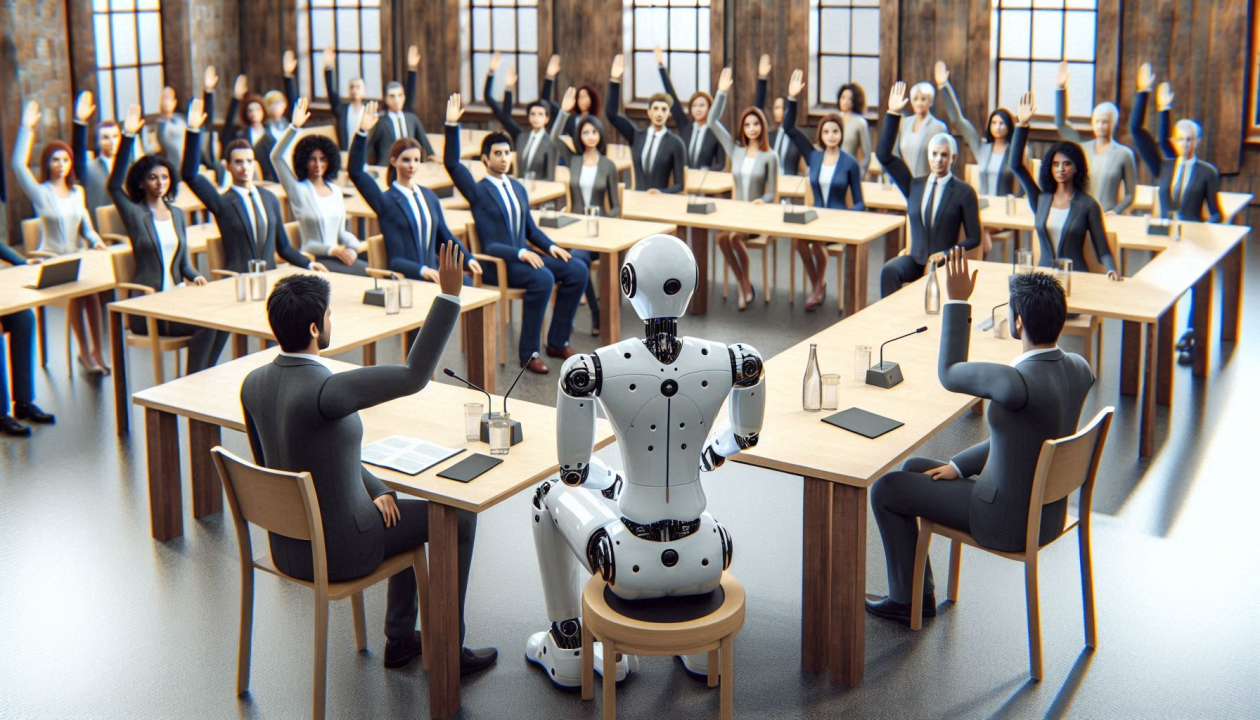
In 35 years in IT, I haven't seen a step-change technology as divisive as AI. The debate often falls into four predictable camps, but real-world adoption is moving faster than the arguments.
June 21, 2024

Reducing the full AI landscape to ChatGPT is a category error. It is a major milestone, but only one part of a much broader and faster-moving field.
April 10, 2024

Broadstone Mill in Stockport stands as a symbol of industrial transformation, and a reminder that today's AI and spatial-computing advances may be ushering in a similarly profound shift.
February 28, 2024

One of my biggest areas of discomfort when projecting the impact of AI on software development is around the role of the software engineer.
December 25, 2023

We are truly living through amazing times. While technologies and processes have evolved dramatically over the past 50 years, the central mission of transforming raw data into actionable knowledge remains constant.