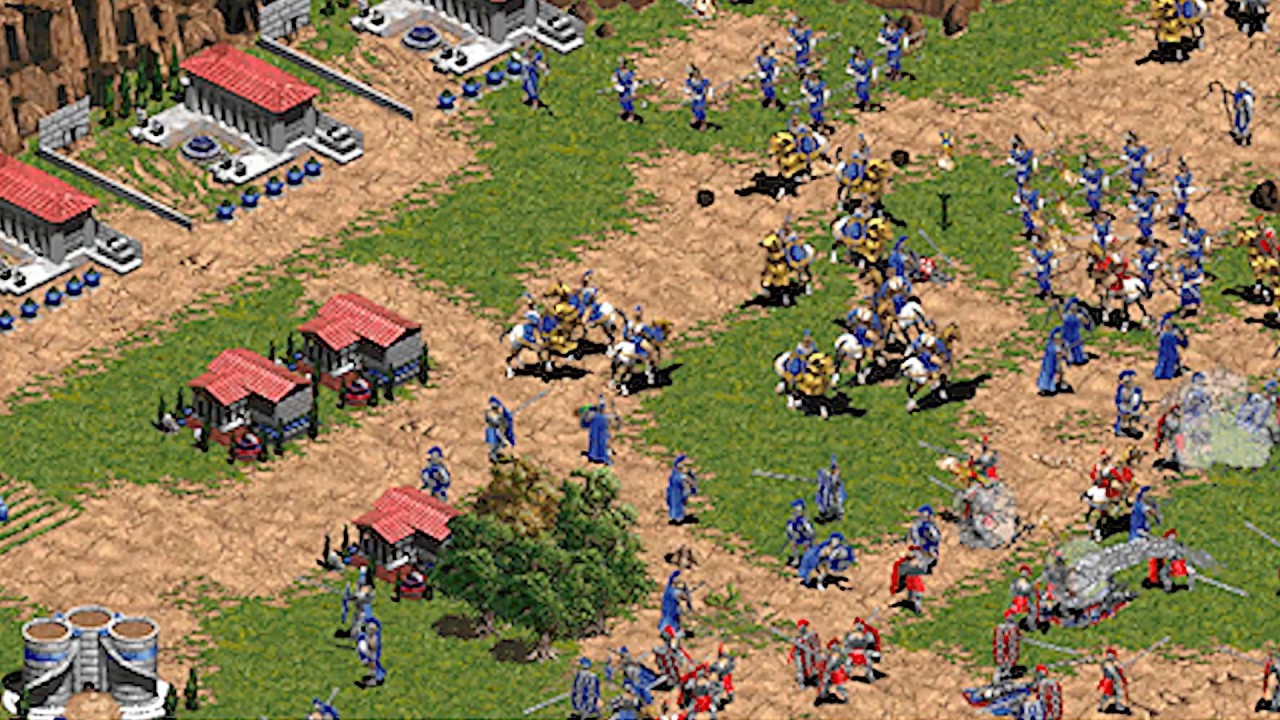
Those familiar with Microsoft's seminal RTS Age of Empires will recognise the dynamic.
Build your civilisation at pace, fuelled by the raw materials available, so that when scarcity sets in, you have advanced far enough along the technological and military line to defend against whoever might be eyeing what is left of your supplies. Or, more likely, so you can acquire by force, or threat of force, the raw materials your adversaries still hold.
Regardless of political or religious ideology, it typically ends the same way: conflict, or the threat of it, as a result of resource scarcity.
Ironically, there should come a point where, if you invest sufficiently in your technology branch, you unlock innovations powerful enough to turn scarcity into abundance, resolving the age-old challenges facing all but the most remote or ideologically rigid civilisations.
AI was, and still is, meant to be that god-like expansion pack. According to people far smarter and richer than me, it may well deliver on that promise.
Unfortunately, as is humanity's way, enough of us would rather keep the status quo firmly in place. Primeval traits - greed, envy, self-protection - dictate a less equitable outcome.
So here we are, at the potential catalyst for the most significant transformation in human history, deciding whether to continue as we have for the last 20,000 years, with war, famine, and social inequality, or move forward into a potential utopian brave new world. And yet, we still cannot quite decide what we want.
The transitional tension
Achieving AI-driven abundance is not free. In the short term, building and running the massive data centres that power today's frontier AI models demands enormous resource consumption: vast amounts of electricity and billions of gallons of water for cooling systems.
Global data-centre demand is projected to roughly double in 2026, approaching levels equivalent to entire countries such as Japan. In regions already facing water stress, this surge risks exacerbating local scarcity and straining grids, even as it lays the groundwork for long-term efficiencies in energy, agriculture, medicine, and beyond.
This creates a classic transitional tension. The very technology that could eliminate scarcity in many domains first intensifies pressure on energy, water, and materials in the here and now.
Without careful planning, accelerated renewables, better cooling innovation, and equitable resource allocation, the path to abundance could deepen short-term divides rather than dissolve them.
In Age of Empires terms, we are deep in the Castle Age grind, burning through wood and stone faster than ever to reach Imperial Age breakthroughs. The question is whether we manage the resource crunch wisely enough to make it there, and whether we share the spoils when we do.