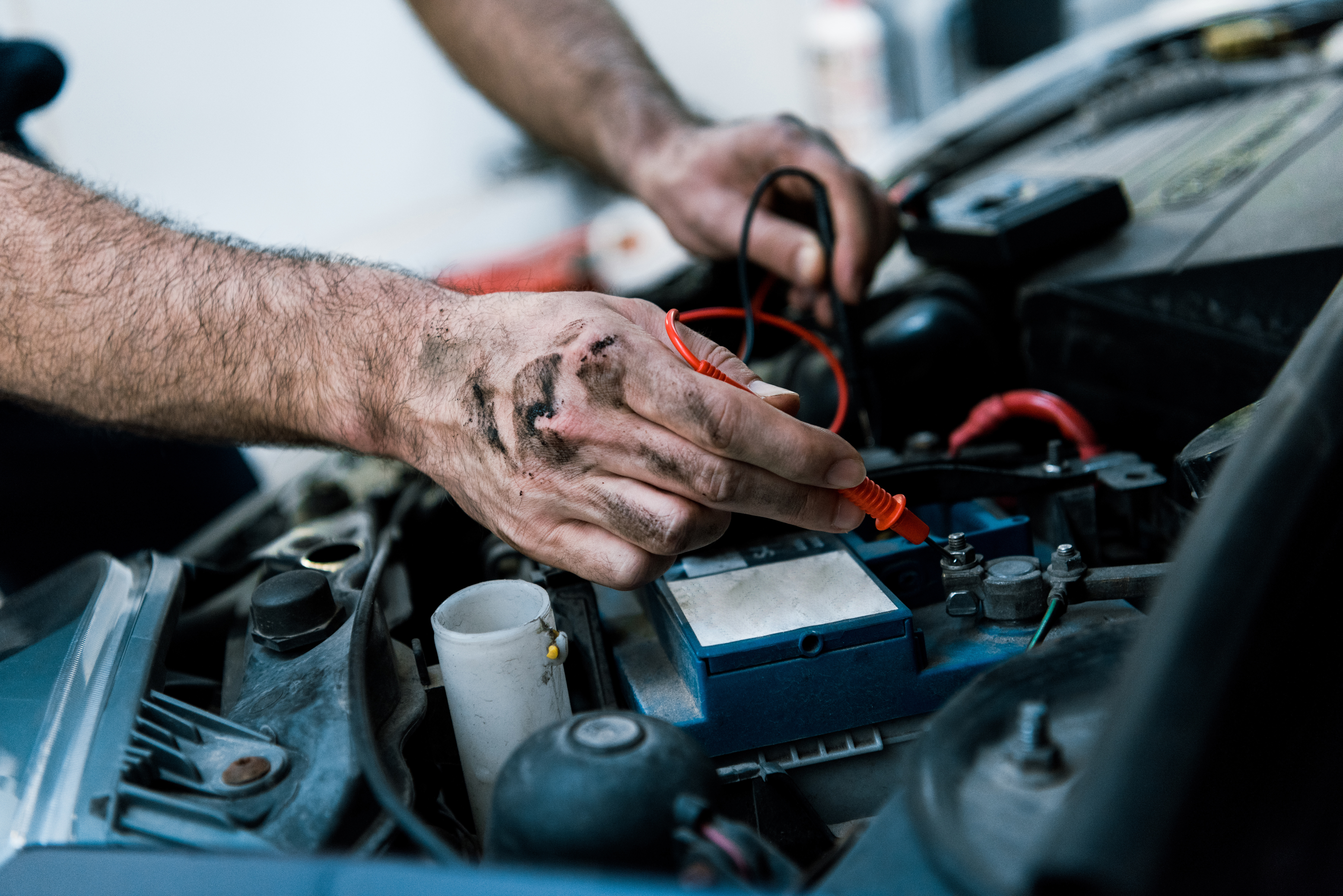
When I passed my driving test, forty odd years ago, the first questions the examiner asked had nothing to do with driving.
How would I locate and change a spark plug. How would I check the oil was at the right level. How would I tighten a fan belt. What would I do with a flat tyre on the hard shoulder of a motorway.
I have no idea whether those were standard. They seemed reasonable at the time, and for a seventeen year old they were straightforward enough to answer. I never thought of them as specialist skills. They were the cost of ownership. The price you paid for running a car.
In the forty odd years since, I have owned close to a dozen cars. I have not done a single one of those things.
Cars got better.
Not by accident. Fuel injection, electronic ignition, sealed units, better metallurgy, tighter tolerances. Tens of thousands of hours of deliberate engineering aimed squarely at making the car stop needing you. The Haynes manual left the boot because it stopped being necessary.
Nor do I mourn the other household maintenance jobs technology has quietly removed. Rewiring a plug, defrosting a freezer, waiting for a tired bulb to finally go. I have not spent one evening missing them.
I feel the same way about the skills I am losing to AI.
Turning scrappy notes into a structured document. Building a project plan. Writing code to solve a problem I could describe faster than I could implement. Each took skill, and each suffered when done poorly. But like maintaining a car, they were chores in service of something more important. Steps to be taken. None of them were the destination.
Writing code was effort expended to accomplish a task in support of a higher objective. It was not planning the route. It was not deciding where to go, or why, or whether the journey was worth making. It was making sure the vehicle got there. Skilled work, satisfying work, work I was good at, and still upkeep.
The judgement that matters is knowing where you are going and knowing whether you have arrived. Everything between those two points is maintenance, and I am content for all of it to go.
Someone always says that I have traded self-sufficiency for dependency. That when a modern car fails I cannot fix it, I can only ring a man with a laptop.
Yes. And I am at the roadside roughly never.
Reliability did not just reduce the work, it removed the occasion for the work. That is what good engineering does. It does not make the failure easier to fix, it makes the failure stop happening. Nobody has ever measured the quality of a car by how pleasant it is to repair.
The expertise did not disappear either. It concentrated.
The mechanic who could rebuild a carburettor at the side of the road has been replaced by a technician with diagnostic equipment and considerably deeper training. Harder to become. Better at the job. Needed a fraction as often, by a fraction as many people.
That is the shape of what is coming, and most of the commentary is still stuck arguing about whether the skills vanish. They do not. The distribution changes. Far fewer people will need to be able to do the work, and the ones who do will need to be a great deal better at it than the generation they replace.
The engineering is not finished, of course. A car earns its reputation by starting every morning for ten years, and that is a claim you can check. AI is not there yet. It is fluent long before it is reliable, and fluency is the easier of the two to sell. That gap will close the way it closed for cars, through unglamorous decades of making the thing actually work rather than making it look like it works.
I am not worried about that. I am impatient about it.
Because the destination was always the point. Not the socket set, not the spare bulbs, not the manual in the boot with the oil thumbprint on page forty. Those were the tax you paid for the journey, and the journey is what I wanted.
I have not opened a bonnet in fifteen years. I have driven further, faster and more comfortably than I ever managed with a full toolkit in the back.
Nobody carries a Haynes manual anymore.
Nobody should.