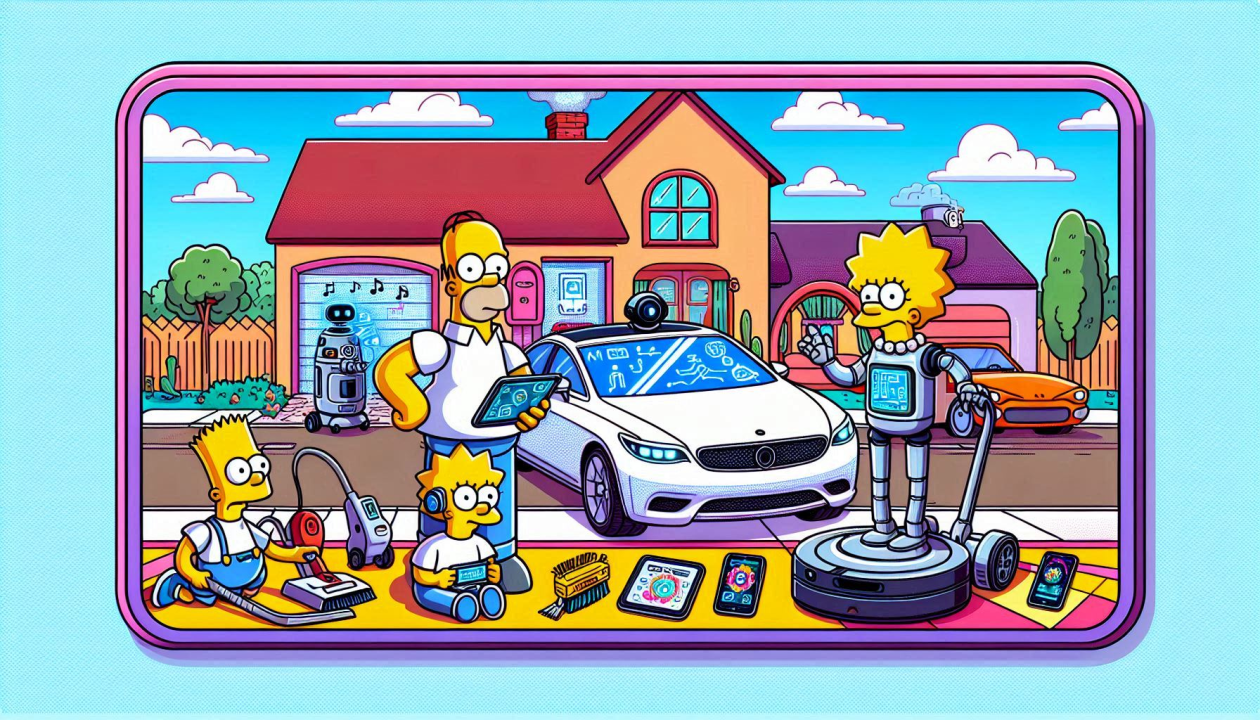
To equate the entirety of artificial intelligence (AI), machine learning (ML), and data science with ChatGPT is like representing centuries of creative arts through a single episode of The Simpsons. ChatGPT is undeniably a significant milestone in natural language processing, but it is only one facet of a complex, multidimensional field.
Its accessibility and ease of use have pushed it into the spotlight, making it the most visible expression of AI for many people. The risk is that this narrow focus obscures the depth and breadth of innovation happening across the wider AI ecosystem.
From multimodal AI that combines vision, sound, and text, to agentic systems solving real-world problems autonomously, to specialised models transforming areas like drug discovery, there is far more happening than conversational language tools alone. Add in ethical frameworks for fairness, edge computing advances, and neuro-symbolic architectures, and the picture becomes much richer. Reinforcement learning from human feedback, constitutional AI, and interpretability research are each addressing different layers of the same challenge: making models that are not just capable, but trustworthy and legible.
It is important to recognise that ChatGPT's design constraints do not apply universally to every AI approach. In its current form, ChatGPT is unlikely to lead directly to AGI. Large language models are excellent at language generation and interpretation, but they can struggle with areas such as spatial reasoning, causal inference, and long-horizon planning, where other methods may be stronger.
The path toward more advanced AI systems, potentially including artificial general intelligence, will likely involve integration across multiple technologies. That path may include:
- Advances in unsupervised and self-supervised learning.
- Development of more robust and generalisable reasoning capability.
- Integration of multimodal learning across sensory inputs.
- Improvements in transfer learning, meta-learning, and memory persistence.
- Breakthroughs in neural computing and brain-inspired architectures.
As this progresses, we need to hold a holistic view of AI's potential and limitations. We should acknowledge achievements like ChatGPT while also supporting the less visible, equally important work taking place across the field.
AI is far more than ChatGPT, and missing that means missing the real transformation already underway.