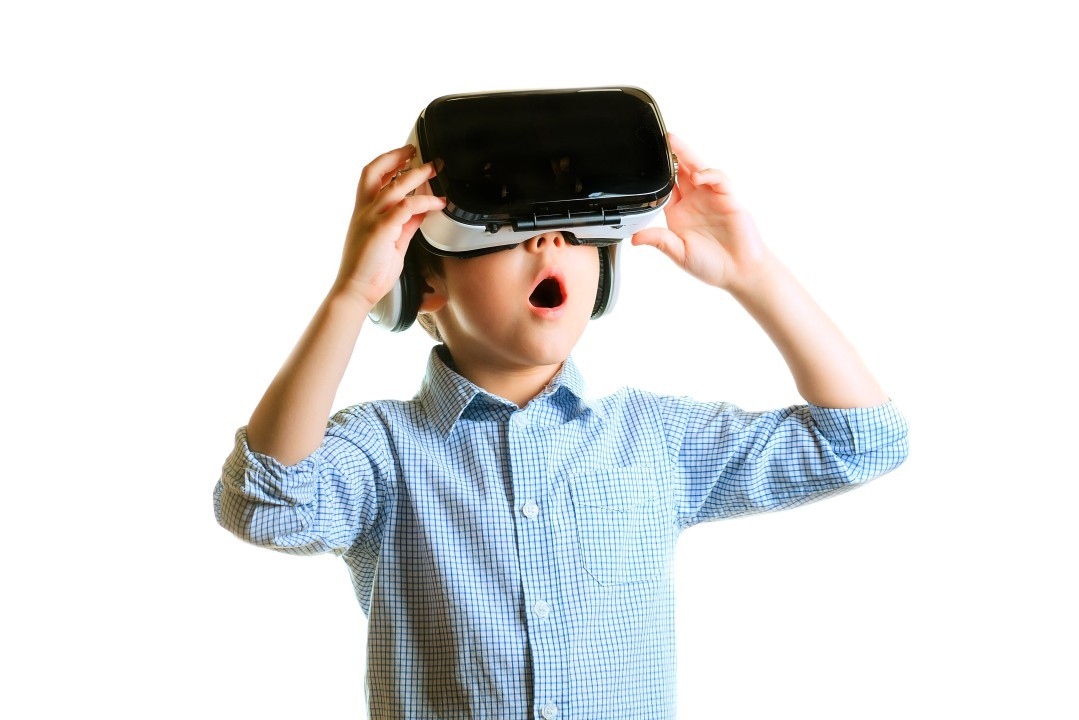
I was wrong about how quickly VR would become a mainstream consumer platform, and part of that misread was the speed at which AI advanced. Virtual reality, and the devices built to deliver it, has not yet reached the adoption level needed to become a default consumption interface for most people.
If we look at devices like Apple Vision Pro as a test case, the same three criteria keep showing up: price, performance, and utility. Progress continues on price and performance, but utility is still the hardest one to solve at scale.
The Utility Problem
This is not because VR lacks value. It is because AI has created increasingly frictionless ways for people to access data, information, and knowledge through the devices they already use. For many day-to-day tasks, that lowers the case for immersive hardware.
VR originally promised richer, more meaningful experiences than traditional 2D interfaces. In many scenarios, though, the headset became another layer between the user and the outcome. The adoption hypothesis was that immersion itself would be the draw — that given a rich enough virtual environment, people would choose it over flat screens. What that missed was the cost of interruption. Putting on a headset is a deliberate act that breaks ambient life in a way that picking up a phone does not. Ironically, instead of always bringing people closer to digital content and services, VR sometimes pushed them further away.
VR vs AI: The Shift
Outside gaming and immersive training, there are now fewer information and productivity scenarios where VR offers unique value that AI, delivered through more familiar devices, cannot approximate.
AI has gained a clear advantage through accessibility and platform reach. The core challenge remains the same, helping people get more value from their digital world, but the likely delivery path has shifted toward smart agents, AR-enabled experiences, and mobile-first interaction.
The Future Role of VR
VR is unlikely to disappear, but its role will probably evolve. A more realistic path is integration into mixed-reality ecosystems, with VR functioning as an extended mode within predominantly AR-led devices.
That convergence could address current pure-VR limitations while retaining the strengths of immersive interaction where it genuinely adds value.
Additional Thoughts
- User experience: immersion alone is not enough; comfort, intuitive control, and long-session usability are still major barriers.
- Content ecosystem: beyond gaming, content depth is still too thin to drive consistent mass adoption.
- Hardware limitations: resolution, field of view, weight, and comfort still break immersion for many users.
- Social acceptance: unlike phones, and often unlike AR glasses, VR headsets remain awkward in many public or shared settings.
What to Expect in the Next Two Years
Over the next two years, expect deeper AR/VR convergence and more capable mixed-reality devices, with smoother transitions between immersive views and real-world overlays. AI integration will also increase, with AI-driven agents, avatars, and environments improving both realism and practical utility.
We may also see lighter, less obtrusive VR-specific hardware, but mainstream adoption will still depend on better price points and stronger use cases beyond entertainment. Enterprise adoption is likely to grow first, especially in training, collaboration, and visualisation. The transition from consumer VR to mixed-reality adoption may also happen unevenly by geography and sector — with specialist use cases pulling ahead of consumer in ways that mirror how early mobile internet adoption looked before smartphones changed the equation. VR may not become the universal consumer platform once envisioned, but it can still hold an important niche alongside AI and AR.